One Thing I’ll Do Differently asks each participant to finish one sentence before they leave: ‘One thing I’ll do differently after today is…’. It’s a simple way to connect what people have learned to their everyday work, and it ends the session with a small, specific commitment rather than good intentions that fade by the next morning.
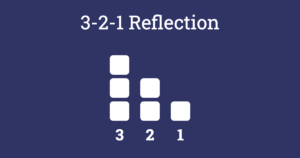
It’s ideal for the end of training, professional development and skills workshops, where the real test of the session is what people do afterwards. It also works at the end of a team away day or a coaching session. Run it on its own in five minutes, or as the last step of a wider review such as the 3-2-1 Reflection.
Method
Write up the sentence starter, give people a couple of minutes to think and write their answer, then invite them to share it with a partner and decide when they will put it into practice.
Step 1: Write up the sentence
Write the sentence starter where everyone can see it: ‘One thing I’ll do differently after today is…’. Explain that you’re looking for one small change, not a full action plan.
Step 2: Think and write
Give everyone two or three minutes to write their answer on a sticky note or card. Writing it down helps people be specific and makes the commitment easier to remember. Encourage them to look back over their notes or the materials from the session first.
Step 3: Make it specific
Before people share, ask them to check their answer: could someone else tell whether they’d done it? For example, someone attending a facilitation training workshop might write ‘I’ll start giving participants two minutes to think before asking for responses in group discussions.’ That’s far more useful than saying they’ll try to be a better facilitator.
Step 4: Share with a partner
If time allows, invite people to share their commitment with a partner. Saying it out loud makes it feel more real, and partners can help each other sharpen answers that are still vague. Keep this to a minute or two each.
Step 5: Decide when
Finally, ask everyone to add when they’ll put their idea into practice, such as ‘at Tuesday’s team meeting’ or ‘on my next training course’. A clear first opportunity makes the change much more likely to happen.
Outcome
Each person leaves with one realistic change they’ve chosen themselves, written down and with a time attached. Because the commitment is their own and it’s small, it’s far more likely to happen than a long list of ideas, and it gives the session a purpose beyond the room.
Tips for Facilitators
- Small beats ambitious: encourage specific, realistic commitments rather than big promises. One change someone can genuinely make is worth more than a list of intentions.
- Give two examples: share a clear answer and a vague one, so people can see the difference.
- Let people keep it private: some commitments are personal. Sharing with a partner should be an invitation, not a requirement.
- Follow up: if you’ll see the group again, ask them to keep their note, and start your next session by asking how they got on.
- Listen to what you hear: if the commitments have little to do with what you covered, that’s useful feedback on how relevant the workshop felt.
Variations
- Letter to yourself: people write their commitment on a postcard addressed to themselves, and you post it to them a few weeks later as a reminder.
- Accountability pairs: partners swap contact details and agree to check in with each other in a fortnight.
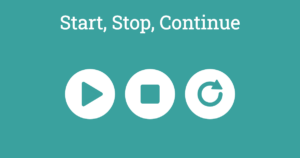
- Personal start, stop, continue: for a slightly bigger personal review, ask people to write one thing to start, one to stop and one to continue, as in Start, Stop, Continue.
- Team version: at the end of a team session, ask the group to agree one thing it will do differently together, and record it with an owner, as in the Decisions and Actions Review.
Accessibility and Online Sessions
Read the sentence starter aloud as well as writing it up, and leave it on display while people think. Offer people the choice of writing, drawing or saying their answer, and offer to write for anyone who finds writing difficult. Allow extra thinking time: some people need longer to turn a general idea into something specific, and that’s where the value lies.
Online, put the sentence starter on a slide or in the chat, and ask people to write their answer on paper, in a shared document or on a digital whiteboard. Use breakout rooms of two for the partner conversation, and remind people to save or screenshot their commitment before the session closes.