The Problem Tree is a visual technique that encourages you to think about the causes of problems and their consequences. This is one step you need to take before solving the problem. You could flip this on its head and use it as a ‘Solution Tree’ instead!
The Problem Tree: Method
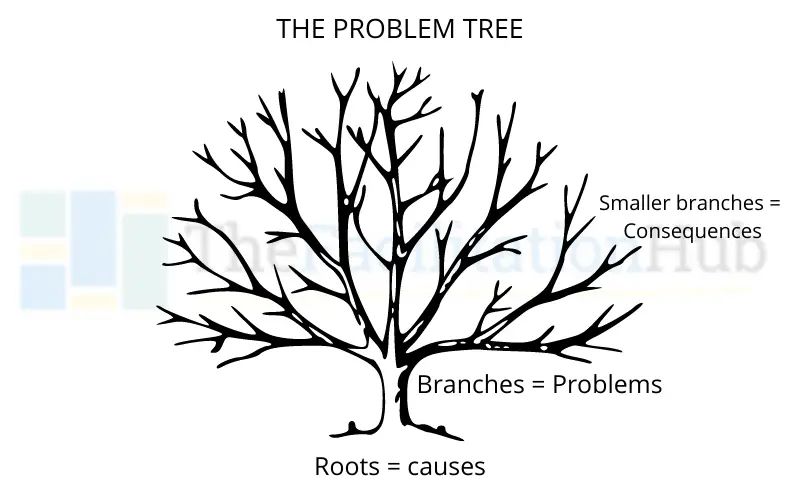
Using a printed diagram of a tree with lots of roots and branches, ask participants to write directly onto the branches with consequences of each problem. You can then start to address the different levels of problems and consequences.
Step 1: Prepare a tree diagram
Prepare a large tree diagram, or ask participants to draw their own on a large sheet of flipchart paper.
Step 2: Work up from the roots
Ask participants to start at the bottom of the tree and climb their way up.
Write directly on the tree, or use post-its:
- Roots: causes
- Large branches: problems
- Medium branches: major consequences
- Small Branches: minor consequences
- Tiny Branches and twigs: consequences for individuals
- Add additional levels to your problem tree as needed
Step 3: Feed back and record the tree
When finished, ask participants to summarize and feedback their discussions. Take a photo of the finished tree diagram to record the discussion and send to participants afterwards.
Outcome
Helps you understand the reasons behind a problem and delve deeper into the consequences, which may uncover things you had not previously thought about. The problem tree can also help you identify individual consequences that are not immediately clear. You can than start to identify solutions for these problems and consequences based on the data from this participatory activity.