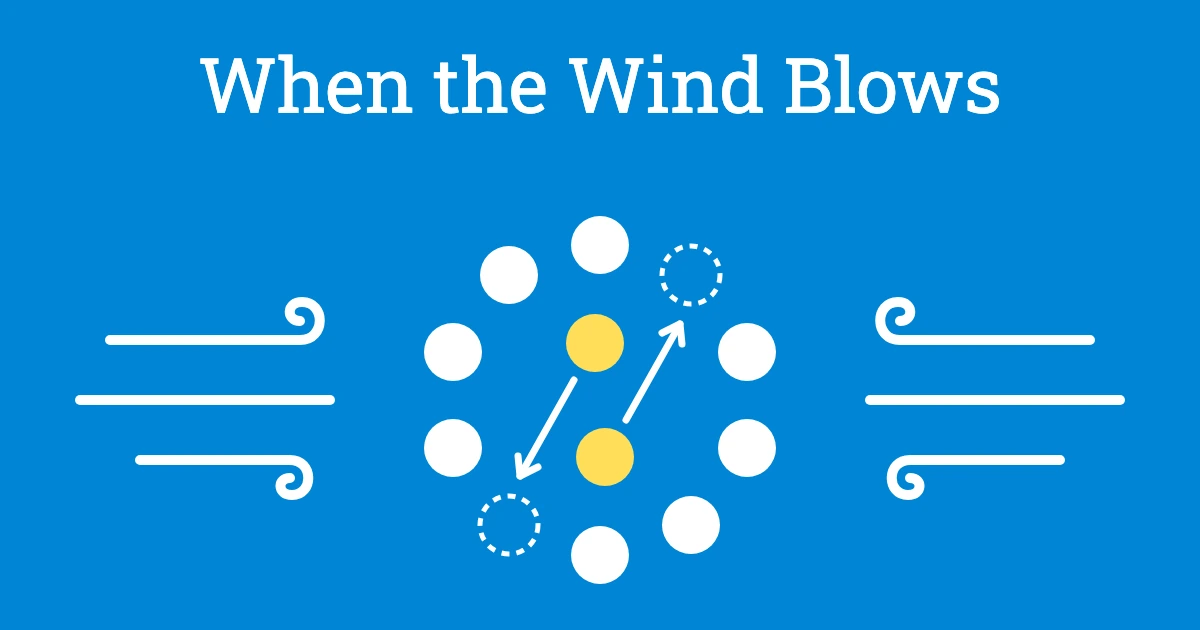
When the Wind Blows is a lively way to get a group moving and mixed up. Everyone sits in a circle, and you call out “The wind blows for everyone who…”, followed by something that’s true for some of the group. Everyone it’s true for gets up and finds a new seat across the circle, so within a few rounds, people are sitting next to someone new and the room is full of laughter.
It’s a good icebreaker because it’s quick, it needs nothing but chairs, and nobody has to speak on their own. It also shows people what they have in common, and you can learn a lot about a group from who stands up. Use it at the start of a session, after a break, or whenever you want people to sit somewhere different.
Method
Seat everyone in a circle, call out who the wind blows for, and let those people swap seats. Repeat with different calls.
Step 1: Set up the circle
Arrange the chairs in a circle, facing inwards, with one for each person. Leave enough space in the middle for people to cross safely, and move bags and coats out of the way.
Step 2: Explain the game
Tell the group how it works, and make clear that nobody has to share anything they’d rather keep to themselves:
“I’m going to call out ‘The wind blows for everyone who…’ and then something about you. If it’s true for you, stand up and find a different seat across the circle. You can’t move to the seat right next to you. If it’s not true, stay where you are.”
Step 3: Start with something you can see
Begin with calls about things people can see, so lots of people move and everyone gets the idea straight away:
“The wind blows for everyone who has brown shoes on today!”
“The wind blows for everyone who is wearing a watch!”
“The wind blows for everyone who is wearing something blue!”
Step 4: Move on to things you can’t see
Once people are moving, switch to calls about their lives and experiences. This is where people start to learn things about each other:
“The wind blows for everyone who travelled here by car!”
“The wind blows for everyone who has a birthday this month!”
“The wind blows for everyone who can speak more than one language!”
“The wind blows for everyone who has been to the beach this year!”
“The wind blows for everyone who has ever performed on a stage!”
Step 5: Finish on a call that moves everyone
After five or six rounds, end with a call that’s true for the whole group, such as “everyone who is ready to get started”, so the game finishes with one last big shuffle and everyone in a new seat.
Outcome
In five to ten minutes, the group has woken up, laughed together and spotted a few things they have in common. People end up sitting next to someone new, which is a good start for any pair or group work that follows.
Tips for Facilitators
- Keep calls kind: avoid anything that could embarrass people or single someone out, such as money, health, relationships or appearance. Stick to clothes, habits, travel and experiences.
- Make sure several people move: if only one person stands up, they can feel exposed. Choose calls that will apply to a good handful of the group.
- Walk, don’t run: say at the start that people should walk across the circle, especially in a small room.
- Link it to your topic: later calls can connect to the workshop, such as “everyone who has run a meeting this week”, to find out about the group’s experience.
- Join in: move when a call applies to you too. It shows you’re part of the group.
Variations
- One chair short: take away one chair, so the caller stands in the middle. When people move, the caller grabs a free seat too, and whoever is left standing makes the next call. It’s faster and more competitive, so only use it with groups who can all move easily.
- Group calls: let participants take turns making the calls, which hands some of the energy back to the group.
- Standing version: with no chairs, people stand in a circle and swap places instead.
If you’d like people to find out even more about each other, try Human Bingo or Line Up.
Accessibility and Online Sessions
Think about mobility before you start. Keep the pace relaxed, make sure there’s a clear, wide path across the circle, and leave space in the circle for wheelchair users. Give everyone the option to take part without moving: they can raise a hand or wave instead, and a neighbour can swap places with them if they’d like a new seat. Don’t use the one-chair-short variation if anyone in the group would struggle to move quickly. Say each call loudly and clearly, and repeat it, so everyone can follow.
Online, anyone the call applies to can turn their camera off and on again, raise a hand, or hold up something of that colour instead of changing seats.