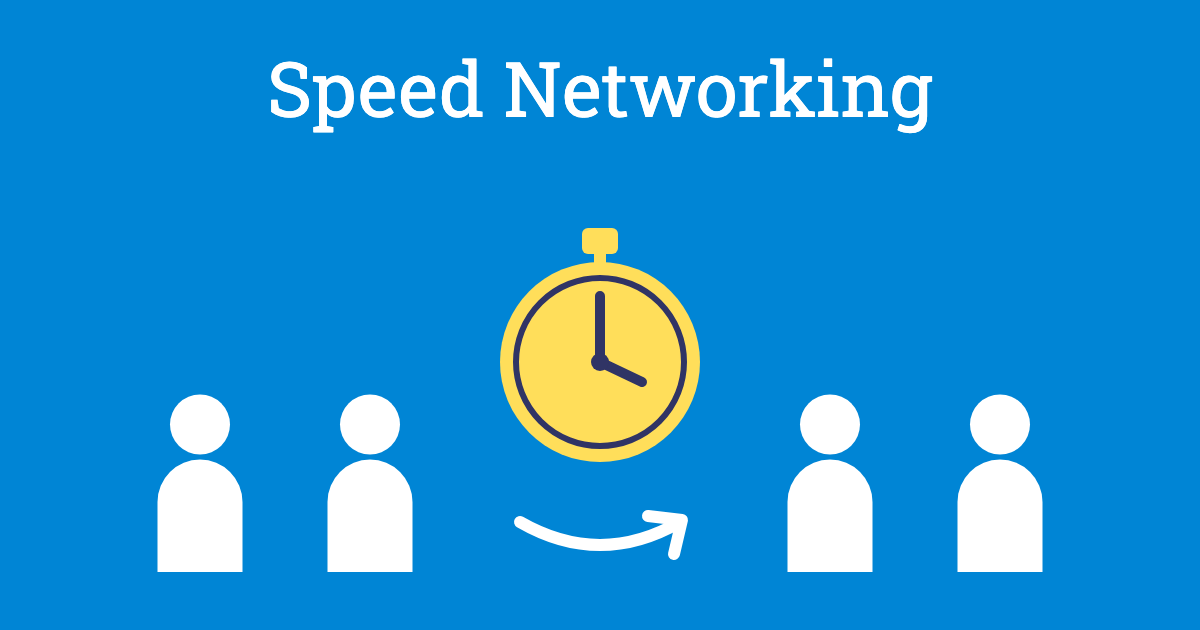
Speed Networking gives everyone in the room a short, structured conversation with lots of different people. Pairs talk for a few minutes about a prompt, then the bell rings and everyone moves on to someone new. In half an hour, people who arrived as strangers have met a good part of the room.
The format borrows from speed dating, but the aim is simply connection: finding out who is in the room, what they do and what they could share. It takes the awkwardness out of networking, because nobody has to approach a stranger or find a polite way to leave a conversation. The timer does both jobs for them. It works well at conferences, at the start of a programme, or when two teams or organisations are meeting for the first time.
Method
Set out the room, explain the rules, run several short timed rounds with a new prompt each time, then close with a quick reflection.
Step 1: Set up the room
The simplest layout is two lines of chairs facing each other, or pairs of chairs spread around the room. One line stays put and the other moves one place along at the end of each round. In a standing session, ask people to form two circles, one inside the other, facing each other. The outer circle moves on each round.
Step 2: Explain how it works
Tell people how long each round lasts, usually three to five minutes, and what the signal to move will be. Ask each pair to share the time fairly, so both people get to speak. Show the first prompt on a screen or a flipchart.
Step 3: Run the rounds
Start the timer and give a one-minute warning before the end of each round, so pairs can finish their conversation. Then ring the bell and ask the moving line to shift one place. Change the prompt every round or two. For example:
- “What brought you here today?”
- “What are you working on at the moment that you’re excited about?”
- “What’s a challenge you’re facing that someone here might help with?”
- “What’s something you could teach someone in five minutes?”
- “Who would you most like to meet before the end of the day?”
Step 4: Swap details
Give people an easy way to follow up. They might swap cards, connect on a professional network or add their details to a shared sheet. A small card where people can note the names of anyone they want to speak to again works well.
Step 5: Close the activity
After the last round, ask the group a couple of quick questions: who met someone with a shared interest, and who found someone they can help? A short show of hands, or two or three stories, brings the energy back to the whole room and gives people a reason to keep talking later.
Outcome
Everyone meets several new people in a short time, with an easy reason to talk and an easy way to move on. Quieter people get the same airtime as confident networkers, and the group leaves with new connections, shared interests and offers of help that can carry on after the session.
Tips for Facilitators
- Keep rounds short: three to five minutes is enough to make a connection and leaves people wanting more, which is better than running out of things to say.
- Use a loud, friendly signal: a bell, chime or burst of music works better than shouting over a busy room.
- Give clear movement instructions: say exactly who moves and in which direction, and show it the first time. Confusion over who goes where uses up valuable minutes.
- Plan for odd numbers: join in yourself, or make one group of three, so nobody sits out a round alone.
- Choose open prompts: questions about interests, projects and challenges lead to better conversations than job titles alone.
- Know when to stop: six to eight rounds is usually plenty. Stop while the room is still buzzing.
Variations
- Speed connections: use the same format within a team or class, with prompts about values, ways of working or what people need from each other.
- Matchmaking: ask people to wear a coloured sticker showing whether they are looking for help, offering help or both, so pairs can find a good match quickly.
- Warm up first: start with a lighter icebreaker such as Two Truths and a Lie or Human Bingo before the timed rounds.
- Question cards: give each person a card with a question from a list such as 30 Great Workshop Icebreaker Questions, and ask pairs to swap cards at the end of each round.
- Slow it down: for longer, more reflective conversations, send pairs out on a Walk and Talk instead.
Accessibility and Online Sessions
Use seated pairs rather than moving circles if anyone has limited mobility, and let the person who finds moving easier do the moving. A noisy room can be hard for people who are hard of hearing or who find crowds overwhelming, so space the pairs out, use a visual signal as well as a sound, and offer a quieter corner. Online, use breakout rooms with random allocation, set them to close after a few minutes, and post the prompt in the chat before each round. Most video call platforms let you reshuffle the rooms each time, so people meet someone new every round.