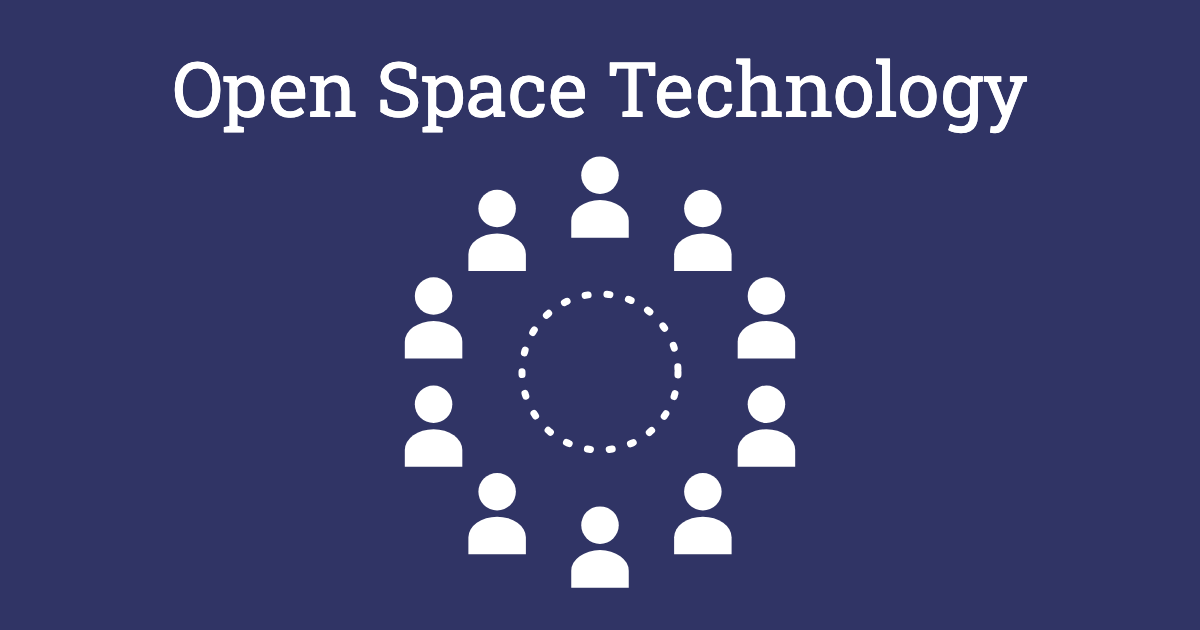
Open Space Technology is a way of running a meeting or event where there’s no agenda until the participants make one. Anyone who cares about the theme can propose a session, everyone chooses where to go, and people move freely between conversations. It was created by Harrison Owen in the 1980s, after he noticed that the coffee breaks were the most useful part of the conferences he organised.
The mechanics are simple: a circle of chairs, a blank wall and a few principles. What makes it an advanced tool is everything you don’t do. Once the agenda is up, as a facilitator you literally do nothing: no steering, no rescuing quiet sessions and no pulling conversations back on topic. Trusting a group with that much freedom, sometimes with a nervous sponsor watching, takes real confidence. If you’re still deciding whether it’s for you, start with 4 Reasons Why We Love Open Space Technology.
Method
Open the space with a theme and the principles, let participants build the agenda in a marketplace, then step back while they run their own sessions. Bring everyone back together at the end for a closing circle. Most of your work happens before the event and in the first and last half hour. In between, your job is to hold the space.
Step 1: Agree a theme that matters
Work with the sponsor on a theme that’s urgent, complex and genuinely open, framed as a question, for example ‘How can we make this town a better place to grow old?’. Open Space works best when nobody has the answer and lots of people care. Check that the sponsor is ready to accept whatever comes out of it: if the outcome has already been decided, choose a different method. Invite everyone who cares about the theme, and make it clear that coming is voluntary.
Step 2: Open the circle
Everyone sits in one circle, with paper and pens in the middle and the agenda wall still blank. Welcome people, state the theme and introduce Harrison Owen’s four principles: whoever comes are the right people; whenever it starts is the right time; whatever happens is the only thing that could have; and when it’s over, it’s over. Keep it short. Your opening sets the tone, and the less you say, the more the space belongs to the group.
Step 3: Explain the law of two feet
Open Space has just one law: if you’re neither learning nor contributing, use your two feet and go somewhere you can. It frees people to leave a session without apology, and it also makes every host responsible for their own session. Mention the two kinds of people the law creates. Bumblebees flit between sessions, cross-pollinating ideas as they go. Butterflies drift out for a coffee or some fresh air, and often start the most interesting conversations of the day. Both are welcome.
Step 4: Build the agenda in the marketplace
Invite anyone with an issue they care about to come into the middle, write it on a sheet with their name, read it out and stick it on the agenda wall in a time and space slot. Wait: the first minute or two can be silent, and that’s fine. When the proposals stop, open the marketplace. Everyone crowds round the wall and signs up for the sessions they want, and hosts can merge or move sessions that clash. Whoever proposes a session hosts it and makes sure someone writes up the notes.
Step 5: Hold the space and do nothing
Once sessions start, step back. Walk round quietly, keep the agenda and report walls tidy and make sure the coffee doesn’t run out, but don’t join in, chair sessions or move people on. If only one person turns up to a session, that’s fine: whoever comes are the right people. The urge to step in will be strong, especially when something looks as though it’s going wrong. Notice it and let it pass. Your calm presence is what tells the group that the space really is theirs.
Step 6: Close the circle
Bring everyone back into one circle, with no tables and no slides. Pass a talking stick or microphone round and invite anyone who wants to speak to share a reflection, an insight or what they’ll do next; passing is fine. Gather the session reports into one document and send it to everyone within a day or two, while the energy is still there.
Outcome
A full agenda of sessions on the issues people care about most, notes from every conversation and a group that owns what happens next. Because people choose where they go, energy flows to the topics that matter, and leaders often emerge who’d never have spoken up in a formal meeting. You might not get the outcome you expected, but you’ll get the one the group was ready for.
Tips for Facilitators
- Hold your nerve: doing nothing is the hardest part. When you feel the urge to step in, ask yourself whether the group needs you or you need to feel useful. It’s usually the second.
- Prepare the sponsor: explain beforehand that they won’t control the agenda, and that sessions they care about might attract only a few people. Ask them to keep their welcome to a couple of minutes and take part as an equal.
- Keep the opening short: aim for 15 minutes from welcome to marketplace. Every extra minute you talk takes a little of the space back.
- Plan the space and time: you’ll need plenty of breakout spaces close together, sessions of 60 to 90 minutes and food and drink that’s always available, so the butterflies have somewhere to land.
- Plan the follow-up: the event is only the start. Agree beforehand who will send out the report, and how the sponsor will respond to what comes out of it.
Variations
- Half-day Open Space: one or two rounds of sessions after a short opening, with a closing circle at the end. A good way to try the method, or to add it to a longer event.
- Multi-day events: start and end each day with a short news circle where people share what’s happening, and on the last morning run a convergence session where the group prioritises the issues, for example with Dot Voting, and forms action groups.
- Open Space slot in a conference: keep the rest of the programme as it is, and give one afternoon over to an open agenda. Delegates often say it was the most useful part.
Accessibility and Online Sessions
Choose a venue with step-free access and breakout spaces close together, so moving between sessions isn’t tiring. Make it clear that the law of two feet is about choice, not walking: people can stay put, and hosts can bring a session to someone. Write the agenda in large, dark letters and share a photo or typed copy that people can read on their phones. Proposing a session in front of everyone can be daunting, so let people hand in a written proposal or ask someone to announce it for them, and offer a quiet space for anyone who needs a break from the buzz.
Online, use a shared board or document as the agenda wall, with one breakout room per session and participants free to move between rooms. Run the opening and closing circles in the main room, and keep a ‘coffee room’ open for the butterflies. Ask each host to type notes straight into a shared document, so the report is ready as soon as the event ends.