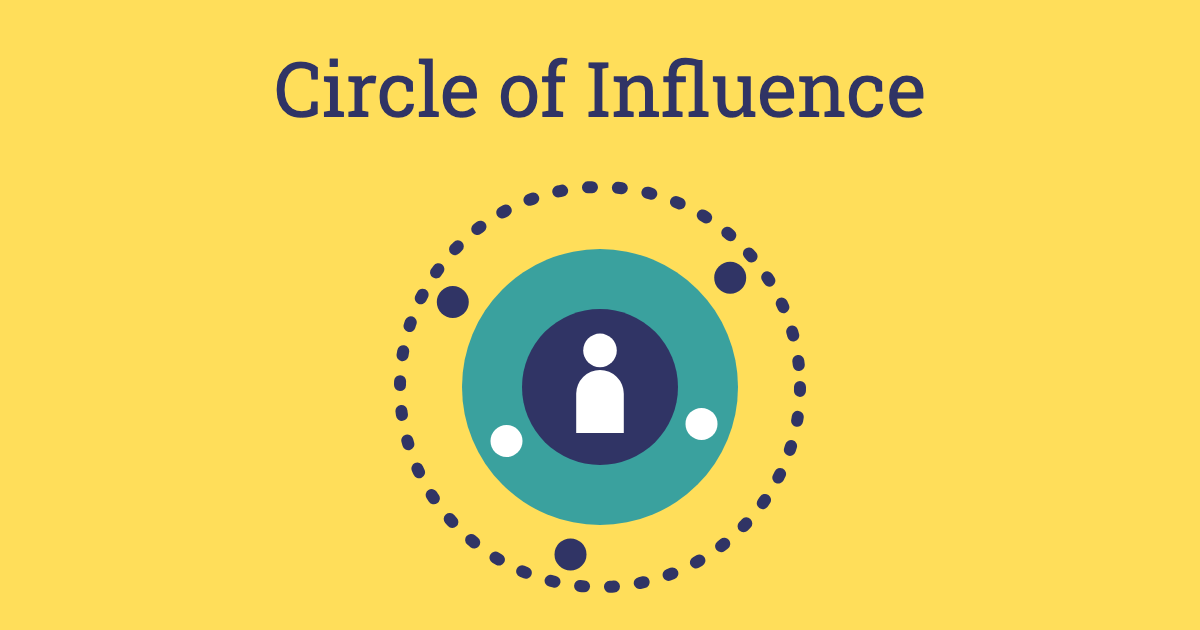
The Circle of Influence helps people focus their energy where it can make a difference. Each person draws three circles and sorts their concerns into those they can control, those they can influence and those they can do little about. Seeing it laid out on paper often brings a sense of relief and a clearer idea of where to start.
The idea is best known from Stephen Covey’s book The 7 Habits of Highly Effective People, which describes a large Circle of Concern holding everything we care about, and a smaller Circle of Influence inside it, holding the things we can actually do something about. Covey argued that people who focus on their Circle of Influence tend to find that it grows over time. Many facilitators add a third, innermost circle for the things we directly control.
It is a useful activity at times of change or uncertainty, for teams under pressure, and in coaching, leadership and wellbeing sessions.
Method
Each person lists their concerns, sorts them into three circles, chooses actions for the inner circles, decides what to let go, then reflects with a partner.
Step 1: Choose the focus
Agree a focus for the activity, such as a current project, a change at work or a personal goal. A clear focus keeps the lists manageable and relevant.
Step 2: Draw the circles
Ask each person to draw three circles, one inside the other, on a large sheet of paper, and label them from the middle outwards:
- Control: things I decide or do myself, such as how I spend my time or how I respond.
- Influence: things I can affect but not decide alone, such as a team decision or a colleague’s view.
- Concern: things that matter to me but that I can do little about, such as the economy, the weather or a decision already made elsewhere.
Step 3: List concerns
Give people five minutes to write down everything on their mind about the focus, one item per sticky note or line. Encourage them to include big and small things, and practical as well as emotional ones.
Step 4: Sort into the circles
Ask everyone to place each concern in the circle where it belongs. Many items will sit partly in one circle and partly in another, so encourage people to split them. For example, “the restructure” might belong in Concern, while “how I prepare for my new role” belongs in Control.
Step 5: Plan actions and let go
For each item in Control and Influence, ask people to write one small action they could take. For items in Concern, invite them to notice how much energy those worries take up, and to decide whether to let them go, park them or simply keep an eye on them.
Step 6: Reflect in pairs
Invite people to share one insight and one action with a partner, without needing to show their whole sheet. Close by asking a few people what changed for them during the activity.
Outcome
People see clearly which of their concerns they can act on and which they can’t, and leave with a few specific, realistic actions. Many feel less overwhelmed, and teams gain a more constructive way to talk about pressures they can’t change.
Tips for Facilitators
- Don’t dismiss concerns: things in the outer circle still matter. The aim is to direct energy wisely, not to tell people to stop caring.
- Keep it private: some concerns may be sensitive, so make sharing optional and never collect the sheets.
- Look for hidden influence: ask people to check the items in Concern. Is there anything small they could do, or anyone they could talk to?
- Keep actions small: one step that someone will actually take this week is worth more than a big plan.
- Be ready for strong feelings: in times of real difficulty, such as job losses, acknowledge the situation honestly and let people know where they can find support.
Variations
- Team version: draw the circles on a wall and ask a team to sort shared concerns together, then agree team actions.
- Coaching trios: after sorting, ask people to take turns sharing one Influence item and hearing advice, as in Troika Consulting.
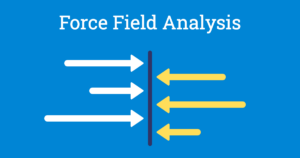
- Weigh up a change: for a bigger change, list the forces for and against it with Force Field Analysis, then sort those forces into the circles.
- Values check: link actions to what matters most to each person, using a Values Card Sort.
Accessibility and Online Sessions
Provide printed templates with the circles already drawn, in large print if needed, and let people write, draw, type or talk their lists through with a partner. Read out the labels and examples so everyone understands them. Because the activity can touch on stress and worry, keep sharing optional and give people the choice to focus on a less personal topic. Online, offer a digital template on a shared whiteboard with a private copy for each person, or ask people to draw the circles on paper, and use breakout rooms for the pair reflection.