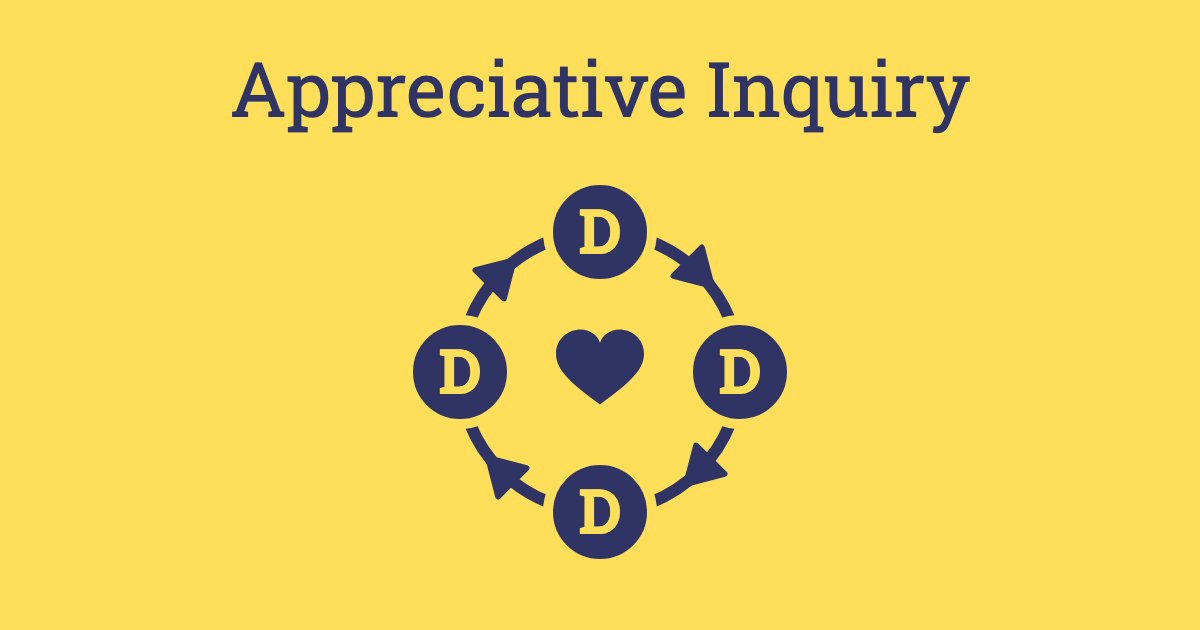
Appreciative Inquiry is a way of leading change by studying what’s already working, rather than what’s broken. Instead of asking ‘What’s the problem?’, the group asks ‘When are we at our best, and how do we get more of that?’. People interview each other about their high points, imagine the future those strengths could build, then design it and commit to making it happen.
It was developed in the 1980s by David Cooperrider and Suresh Srivastva at Case Western Reserve University, and it’s usually run as the 4-D cycle: Discover, Dream, Design and Destiny (sometimes called Deliver). It’s an advanced tool for two reasons. The questions do almost all the work, and writing open, positive questions about a real and sometimes difficult topic takes practice. You also need to hold the group through four quite different stages, sometimes over several days, keeping the energy and the thread going from one to the next.
Method
Agree a positive topic, then guide the group through the four stages of the 4-D cycle. Each stage builds on the one before, so leave enough time for all four and keep what each stage produces on the wall as you go.
Step 1: Choose a positive topic
Work with the sponsor to turn the issue into something the group wants more of. ‘Reducing staff turnover’ might become ‘Creating a place where people love to work’, and ‘fixing complaints’ might become ‘Customer service people talk about’. This is sometimes called the Define stage, and it shapes everything that follows. Then write three or four interview questions about the topic (see the tips below).
Step 2: Discover what works at its best
In pairs, people interview each other for about 15 minutes each way, listening for stories rather than opinions. For example: ‘Tell me about a time when you felt really proud of the service your team gave. What was happening? What made it possible?’. Pairs then join up in groups of six to eight, share the best stories and pick out the themes: the strengths, conditions and values that were there when things went well. This is the group’s positive core.
Step 3: Dream what could be
Ask groups to imagine it’s three to five years from now and those strengths have become the norm. What does it look, sound and feel like? Encourage big, creative thinking: groups can draw a picture, act out a short scene or write a newspaper front page, then share their dream with the room. Look for the common threads.
Step 4: Design how it will work
Groups turn the dream into provocative propositions: bold statements written in the present tense as if they’re already true, for example ‘Every customer leaves feeling they were listened to’. Each one should stretch the organisation but be grounded in the stories from the Discover stage. Share and refine them together, and if there are too many, use Dot Voting to choose.
Step 5: Commit to action in Destiny
Ask people to volunteer for actions that will make the propositions real, from small steps they can take tomorrow to bigger projects. Form action groups around the propositions people care about most, and agree who’s doing what and when you’ll meet again. Whether you call it Destiny or Deliver, the point is the same: momentum comes from people choosing what to do, not being told.
Outcome
A shared picture of the organisation at its best, a future the group is excited about and a set of commitments people have chosen for themselves. Because it starts with real stories of success, it builds confidence and goodwill, and people often find the energy to tackle problems that felt stuck before. It’s especially useful after a difficult period, when a group needs reminding what it’s capable of.
Tips for Facilitators
- Put your preparation into the questions: good questions ask for a specific story, assume a positive experience exists and ask what made it possible. ‘Why don’t meetings work?’ becomes ‘Tell me about the best meeting you’ve been to here. What made it work?’. Try them on a colleague before the session.
- Positive doesn’t mean pretending: if people raise problems, don’t shut them down. Acknowledge them and ask, ‘What would you like to see instead?’. The answer is often the start of a dream.
- Hold the thread: keep the themes, dreams and propositions on the wall, and open each stage by recapping the last one, so the cycle feels like one journey rather than four separate activities.
- Plan for the dip: Dream is high energy, but Design needs slower, more concrete work. Put a break between them and give groups clear examples of good propositions.
- Get the sponsor in the room: Destiny only works if the people with power take part and back the actions that come out of it.
Variations
- Short version: for a two or three hour team session, use a single interview question and a short version of each stage, ending with one or two commitments per person.
- Appreciative Inquiry Summit: the whole system in one room, from staff to customers and partners, often hundreds of people over two to four days.
- Appreciative review: at the end of a project, ask Discover-style questions such as ‘What was our best moment, and what made it possible?’, then follow up with Start, Stop, Continue.
Accessibility and Online Sessions
Share the interview questions in writing before and during the session, in plain language and large print, so people have time to think. Paired interviews suit people who find speaking in big groups hard, and anyone can write or draw their answers instead. For the Dream stage, offer several ways to take part, such as drawing, writing or talking, so nobody feels they have to perform. A question about a high point can bring up difficult memories for some people, so make it clear they choose which story to tell.
Online, run the interviews in breakout rooms of two with the questions pasted in the chat, then move to rooms of six to share themes. Use an online whiteboard for the themes, dreams and propositions so everyone can see them build up. Several shorter sessions work better than one long day on screen: for example, Discover and Dream in one session and Design and Destiny in the next.